2017年5月31日 星期三

week 10

Genre

Genre  is any form or type of communication in any mode (written, spoken, digital, artistic, etc.) with socially-agreed upon conventions developed over time. Genre is most popularly known as a category of literature, music, or other forms of art or entertainment, whether written or spoken, audio or visual, based on some set of stylistic criteria, yet genres can be aesthetic, rhetorical, communicative, or functional. Genres form by conventions that change over time as new genres are invented and the use of old ones is discontinued. Often, works fit into multiple genres by way of borrowing and recombining these conventions. Stand alone texts, works, or pieces of communication may have individual styles, but genres are amalgams of these texts based on agreed upon or socially inferred conventions. Some genres may be rigid with strictly adhered to guidelines while others may be very flexible.

Genre began as an absolute classification system for ancient Greek literature. Poetry, prose, and performance each had a specific and calculated style that related to the theme of the story. Speech patterns for comedy would not be appropriate for tragedy, and even actors were restricted to their genre under the assumption that a type of person could tell one type of story best. In later periods genres proliferated and developed in response to changes in audiences and creators. Genre became a dynamic tool to help the public make sense out of unpredictable art. Because art is often a response to a social state, in that people write/paint/sing/dance about what they know about, the use of genre as a tool must be able to adapt to changing meanings.


Fiction


Fiction is the classification for any story or similar work derived from imagination—in other words, not based strictly on history or fact.Fiction can be expressed in a variety of formats, including writings, live performances, films, television programs, animations, video games, and role-playing games, though the term originally and most commonly refers to the narrative forms of literature (see literary fiction), including the novel, novella, short story, and play. Fiction does not refer to a specific mode or genre, unless used in its narrowest sense to mean a "literary narrative". Fiction is traditionally regarded as the opposite of non-fiction, whose creators assume responsibility for presenting only the historical and factual truth; however, the distinction between fiction and non-fiction can be blurred, for example, in postmodern literature.


A work of fiction is an act of creative invention; its total faithfulness to reality is not typically assumed by its audience,and so it is not expected to present only characters who are actual people or descriptions that are factually accurate. Instead, the context of fiction is generally open to interpretation, due to fiction's freedom from adhering exactly to the real world. Characters and events within a fictional work may even be openly set in their own context entirely separate from the known universe: a fictional universe.


Narrative

A narrative or story is a report of connected events, real or imaginary, presented in a sequence of written or spoken words, or still or moving images, or both. The word derives from the Latin verb narrare, "to tell", which is derived from the adjective gnarus, "knowing" or "skilled".

Narrative can be organized in a number of thematic or formal categories: non-fiction (such as definitively including creative non-fiction, biography, journalism, transcript poetry, and historiography); fictionalization of historical events (such as anecdote, myth, legend, and historical fiction); and fiction proper (such as literature in prose and sometimes poetry, such as short stories, novels, and narrative poems and songs, and imaginary narratives as portrayed in other textual forms, games, or live or recorded performances).


Narrative is found in all forms of human creativity, art, and entertainment, including speech, literature, theatre, music and song, comics, journalism, film, television and video, radio, gameplay, unstructured recreation, and performance in general, as well as some painting, sculpture, drawing, photography, and other visual arts (though several modern art movements refuse the narrative in favor of the abstract and conceptual), as long as a sequence of events is presented.


Lyrics


Lyrics are words that make up a song usually consisting of verses and choruses. The writer of lyrics is a lyricist. The words to an extended musical composition such as an opera are, however, usually known as a "libretto" and their writer, as a "librettist". The meaning of lyrics can either be explicit or implicit. Some lyrics are abstract, almost unintelligible, and, in such cases, their explication emphasizes form, articulation, meter, and symmetry of expression. Rappers can also create lyrics (often with a variation of rhyming words) that are meant to be spoken rhythmically rather than sung.


Stop All the Clock, Cut off the Telephone
W. H. Auden


Stop all the clocks, cut off the telephone,
Prevent the dog from barking with a juicy bone,
Silence the pianos and with muffled drum
Bring out the coffin, let the mourners come. 

Let aeroplanes circle moaning overhead
Scribbling on the sky the message He Is Dead,
Put crepe bows round the white necks of the public doves,
Let the traffic policemen wear black cotton gloves. 

He was my North, my South, my East and West,
My working week and my Sunday rest,
My noon, my midnight, my talk, my song;
I thought that love would last for ever: I was wrong.

The stars are not wanted now: put out every one;
Pack up the moon and dismantle the sun;
Pour away the ocean and sweep up the wood.

For nothing now can ever come to any good.

week 9

midterm exam~

week 8

spring break~

week 7

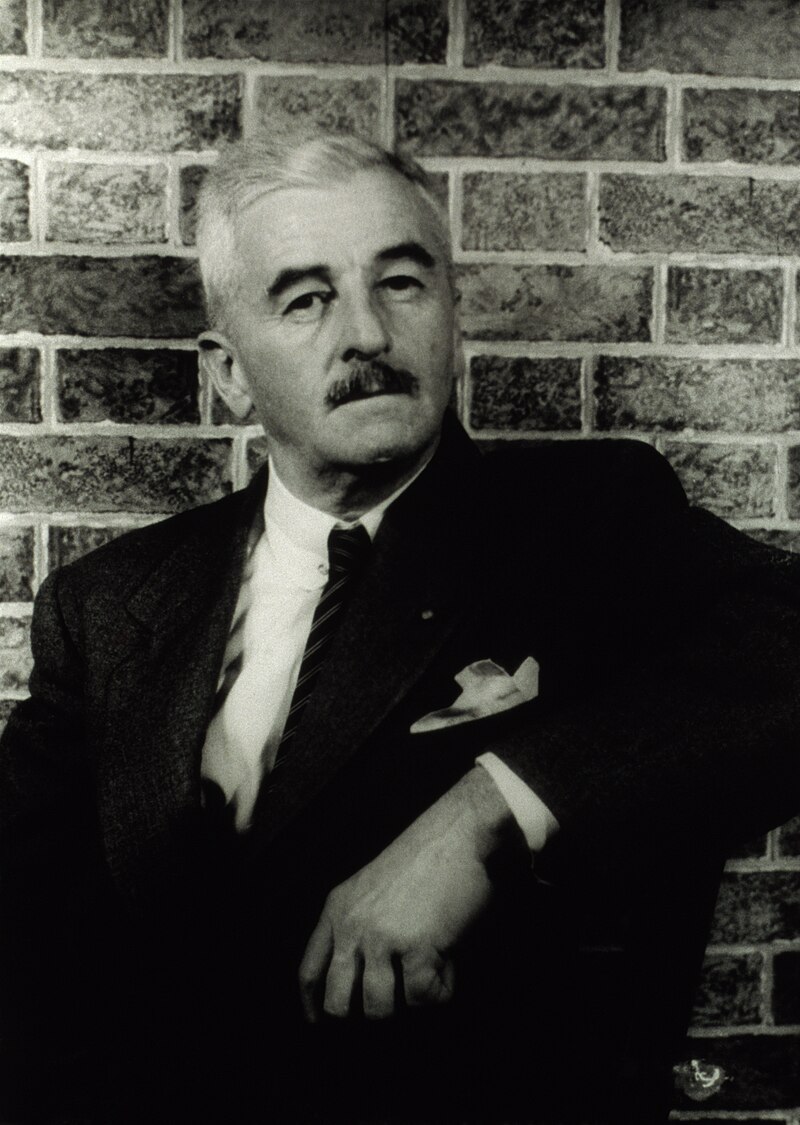
William Faulkner

Carl Van Vechten - William Faulkner.jpg


William Cuthbert Faulkner  was an American writer and Nobel Prize laureate from Oxford, Mississippi. Faulkner wrote novels, short stories, a play, poetry, essays, and screenplays. He is primarily known for his novels and short stories set in the fictional Yoknapatawpha County, based on Lafayette County, Mississippi, where he spent most of his life.

Faulkner is one of the most celebrated writers in American literature generally and Southern literature specifically. Though his work was published as early as 1919, and largely during the 1920s and 1930s, Faulkner was relatively unknown until receiving the 1949 Nobel Prize in Literature, for which he became the only Mississippi-born Nobel winner. Two of his works, A Fable (1954) and his last novel The Reivers (1962), won the Pulitzer Prize for Fiction. In 1998, the Modern Library ranked his 1929 novel The Sound and the Fury sixth on its list of the 100 best English-language novels of the 20th century; also on the list were As I Lay Dying (1930) and Light in August (1932). Absalom, Absalom! (1936) is often included on similar lists.


A Rose for Emily

"A Rose for Emily" is a short story by American author William Faulkner, first published in the April 30, 1930, issue of The Forum. The story takes place in Faulkner's fictional city, Jefferson, Mississippi, in the fictional southern town of Yoknapatawpha County. It was Faulkner's first short story published in a national magazine.

→Plot summary

The story opens with a brief first-person account of the funeral of Emily Grierson, an elderly Southern woman whose funeral is the obligation of their small town. It then proceeds in a non-linear fashion to the narrator's recollections of Emily's archaic and increasingly strange behavior throughout the years. Emily is a member of a family of the antebellum Southern aristocracy. After the Civil War, the family has fallen on hard times. She and her father, the last two of the clan, continue to live as if in the past; Emily’s father refuses for her to marry. Her father dies when Emily is about the age of 30, and takes her by surprise. She refused to give up his corpse, and the townspeople wrote it off as her grieving process.

After her acceptance of her father's death, Emily somewhat revives; she becomes friendly with Homer Barron, a Northern laborer who comes to town shortly after Mr. Grierson’s death. The connection surprises some of the community while others are glad she is taking an interest. But Homer claims that he is not a marrying man—a bachelor. Emily shortly buys arsenic from a druggist in town, which convinces the townspeople she was to poison herself with it. Emily’s distant cousins are called into town by the minister’s wife to supervise Miss Emily and Homer Barron. Homer leaves town for some time, reputedly to give Emily a chance to get rid of her cousins, and returns three days later after the cousins have left. Homer is never seen again.

Despite these turnabouts in her social status, Emily continues to behave haughtily, as she had before her father died. Her reputation is such that the city council finds themselves unable to confront her about a strong smell that has begun to emanate from the house. Instead, they decide to send men to her house under the cover of darkness to sprinkle lime around the house, after which the smell dissipates. The mayor of the town, Colonel Sartoris, made a gentleman's agreement to overlook her taxes as an act of charity, though it was done under a pretense of repayment towards her father to assuage Emily's pride after her father had died. Years later, when the next generation has come to power, Emily insists on this informal arrangement, flatly refusing that she owes any taxes; the council declines to press the issue. Emily has become a recluse: she is never seen out of the house, and only rarely accepts people into it. The community comes to view her as a "hereditary obligation" on the town, who must be humored and tolerated.

The funeral is a large affair; Emily had become an institution, so her death sparks a great deal of curiosity about her reclusive nature and what remains of her house. After she is buried, a group of townsfolk enters her house to see what remains of her life there. The door to her upstairs bedroom is locked; some of the townsfolk kick in the door to see what has been hidden for so long. Inside, among the possessions that Emily had bought for Homer, lies the decomposed corpse of Homer Barron on the bed; on the pillow beside him is the indentation of a head and a single strand of Emily's gray hair.


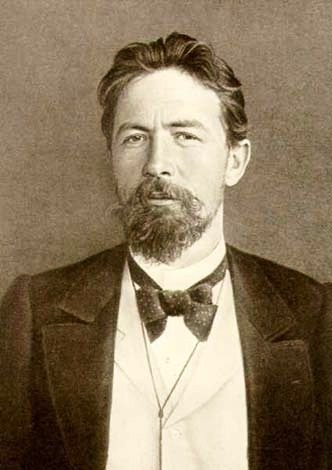
Anton Chekhov

Chekhov seated at a desk


Anton Pavlovich Chekhov was a Russian playwright and short story writer, who is considered to be among the greatest writers of short fiction in history. His career as a playwright produced four classics and his best short stories are held in high esteem by writers and critics.Along with Henrik Ibsen and August Strindberg, Chekhov is often referred to as one of the three seminal figures in the birth of early modernism in the theatre. Chekhov practiced as a medical doctor throughout most of his literary career: "Medicine is my lawful wife", he once said, "and literature is my mistress."

Chekhov renounced the theatre after the reception of The Seagull in 1896, but the play was revived to acclaim in 1898 by Konstantin Stanislavski's Moscow Art Theatre, which subsequently also produced Chekhov's Uncle Vanya and premiered his last two plays, Three Sisters and The Cherry Orchard. These four works present a challenge to the acting ensemble as well as to audiences, because in place of conventional action Chekhov offers a "theatre of mood" and a "submerged life in the text".


Chekhov had at first written stories only for financial gain, but as his artistic ambition grew, he made formal innovations which have influenced the evolution of the modern short story. He made no apologies for the difficulties this posed to readers, insisting that the role of an artist was to ask questions, not to answer them.


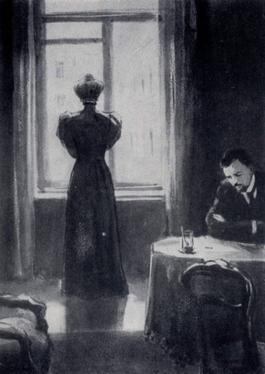
The Lady with the Dog

TheLadywiththeDog.jpeg


"The Lady with the Dog" is a short story by Anton Chekhov first published in 1899. It tells the story of an adulterous affair between a Russian banker and a young lady he meets while vacationing in Yalta. The story comprises four parts: part I describes the initial meeting in Yalta, part II the consummation of the affair and the remaining time in Yalta, part III Gurov's return to Moscow and his visit to Anna's town, and part IV Anna's visits to Moscow. One of Chekhov's most famous pieces of short fiction, Vladimir Nabokov declared that it was one of the greatest short stories ever written.

week 6

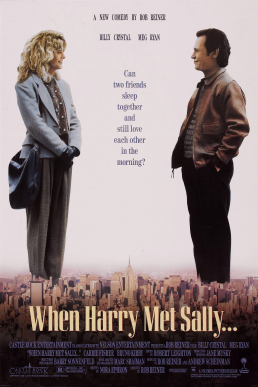
When Harry Met Sally

WhenHarryMetSallyPoster.jpg


When Harry Met Sally… is a 1989 American romantic comedy film written by Nora Ephron and directed by Rob Reiner. It stars Billy Crystal as Harry and Meg Ryan as Sally. The story follows the title characters from the time they meet just before sharing a cross-country drive, through twelve years or so of chance encounters in New York City. The film raises the question "Can men and women ever just be friends?" and advances many ideas about relationships that became household concepts, such as "high-maintenance" and the "transitional person".

The origins of the film were derived from Reiner's return to single life after a divorce. An interview Ephron conducted with Reiner provided the basis for Harry. Sally was based on Ephron and some of her friends. Crystal came on board and made his own contributions to the screenplay, making Harry funnier. Ephron supplied the structure of the film with much of the dialogue based on the real-life friendship between Reiner and Crystal. The soundtrack consists of standards performed by Harry Connick Jr., with a big band and orchestra arranged by Marc Shaiman. Connick won his first Grammy Award for Best Jazz Male Vocal Performance.

Columbia Pictures released the film using the "platform" technique, which involved opening it in a few select cities, letting positive word of mouth generate interest, and then gradually expanding distribution over subsequent weeks. When Harry Met Sally... grossed a total of US$92.8 million in North America. Ephron received a British Academy Film Award, an Oscar nomination, and a Writers Guild of America Award nomination for her screenplay. The film is ranked 23rd on AFI's 100 Years... 100 Laughs list of the top comedy films in American cinema and number 60 on Bravo's "100 Funniest Movies". In early 2004, the film was adapted for the stage in a production starring Luke Perry and Alyson Hannigan.


Parody


A parody is a work created to imitate, make fun of, or comment on an original work—its subject, author, style, or some other target—by means of satiric or ironic imitation. As the literary theorist Linda Hutcheon puts it, "parody … is imitation, not always at the expense of the parodied text." Another critic, Simon Dentith, defines parody as "any cultural practice which provides a relatively polemical allusive imitation of another cultural production or practice." Parody may be found in art or culture, including literature, music (although "parody" in music has an earlier, somewhat different meaning than for other art forms), animation, gaming, and film.


The writer and critic John Gross observes in his Oxford Book of Parodies, that parody seems to flourish on territory somewhere between pastiche ("a composition in another artist's manner, without satirical intent") and burlesque (which "fools around with the material of high literature and adapts it to low ends"). Meanwhile, the Encyclopédie of Denis Diderot distinguishes between the parody and the burlesque, "A good parody is a fine amusement, capable of amusing and instructing the most sensible and polished minds; the burlesque is a miserable buffoonery which can only please the populace." Historically, when a formula grows tired, as in the case of the moralistic melodramas in the 1910s, it retains value only as a parody, as demonstrated by the Buster Keaton shorts that mocked that genre.


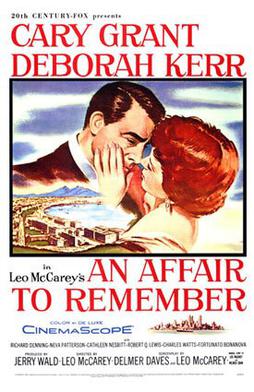
An Affair to Remember

AffairtoRemember.jpg

An Affair to Remember is a 1957 American romance film starring Cary Grant and Deborah Kerr, directed by Leo McCarey and filmed in CinemaScope and DeLuxe Color. It was distributed by 20th Century Fox. The film is considered one of the most romantic movies of all time, according to the American Film Institute. The film was a remake of McCarey's 1939 film Love Affair, starring Irene Dunne and Charles Boyer.


Sleepless in Seattle

Sleepless in seattle.jpg


Sleepless in Seattle is a 1993 American romantic comedy-drama film directed and co-written by Nora Ephron, based on a story by Jeff Arch. It stars Tom Hanks and Meg Ryan, alongside a supporting cast featuring Bill Pullman, Ross Malinger, Rob Reiner, Rosie O'Donnell, Gaby Hoffmann, Victor Garber, and Rita Wilson. The film was a critical and commercial success, grossing over $220 million worldwide.

week 5

Cathedral


A cathedral is a Christian church which contains the seat of a bishop, thus serving as the central church of a diocese, conference, or episcopate. The counterpart term for such a church in German is Dom from Latin domus ecclesiae or domus episcopalis; also Italian Duomo, Dutch Domkerk and cognates in many other European languages. Churches with the function of "cathedral" are usually specific to those Christian denominations with an episcopal hierarchy, such as the Roman Catholic, Anglican, Orthodox, and some Lutheran and Methodist churches. Church buildings embodying the functions of a cathedral first appear in Italy, Gaul, Spain and North Africa in the 4th century, but cathedrals did not become universal within the Western Catholic Church until the 12th century, by which time they had developed architectural forms, institutional structures and legal identities distinct from parish churches, monastic churches and episcopal residences.

In respect of the church buildings in the Eastern Orthodox Church, the English word "cathedral" commonly translates katholikon (sobor in Slavic languages), meaning of "assembly"; but this title is also applied to monastic and other major churches without episcopal responsibilities. When the church at which an archbishop or "metropolitan" presides is specifically intended, the term kathedrikos naos (literally: "cathedral church") is used.

Following the Protestant Reformation, the Christian church in several parts of Western Europe, such as Scotland, the Netherlands, certain Swiss Cantons and parts of Germany, adopted a Presbyterian polity that did away with bishops altogether. Where ancient cathedral buildings in these lands are still in use for congregational worship, they generally retain the title and dignity of "cathedral", maintaining and developing distinct cathedral functions, but void of hierarchical supremacy. From the 16th century onwards, but especially since the 19th century, churches originating in Western Europe have undertaken vigorous programmes of missionary activity, leading to the founding of large numbers of new dioceses with associated cathedral establishments of varying forms in Asia, Africa, Australasia, Oceania and the Americas. In addition, both the Catholic Church and Orthodox churches have formed new dioceses within formerly Protestant lands for converts and migrant co-religionists. Consequently, it is not uncommon to find Christians in a single city being served by three or more cathedrals of differing denominations.


Beowulf

Beowulf Cotton MS Vitellius A XV f. 132r.jpg


Beowulf is an Old English epic poem consisting of 3,182 alliterative lines. It may be the oldest surviving long poem in Old English and is commonly cited as one of the most important works of Old English literature. A date of composition is a matter of contention among scholars; the only certain dating pertains to the manuscript, which was produced between 975 and 1025. The author was an anonymous Anglo-Saxon poet, referred to by scholars as the "Beowulf poet".

The poem is set in Scandinavia. Beowulf, a hero of the Geats, comes to the aid of Hrothgar, the king of the Danes, whose mead hall in Heorot has been under attack by a monster known as Grendel. After Beowulf slays him, Grendel's mother attacks the hall and is then also defeated. Victorious, Beowulf goes home to Geatland (Götaland in modern Sweden) and later becomes king of the Geats. After a period of fifty years has passed, Beowulf defeats a dragon, but is fatally wounded in the battle. After his death, his attendants cremate his body and erect a tower on a headland in his memory.


The full poem survives in the manuscript known as the Nowell Codex. It has no title in the original manuscript, but has become known by the name of the story's protagonist. In 1731, the manuscript was badly damaged by a fire that swept through Ashburnham House in London that had a collection of medieval manuscripts assembled by Sir Robert Bruce Cotton. The Nowell Codex is currently housed in the British Library.


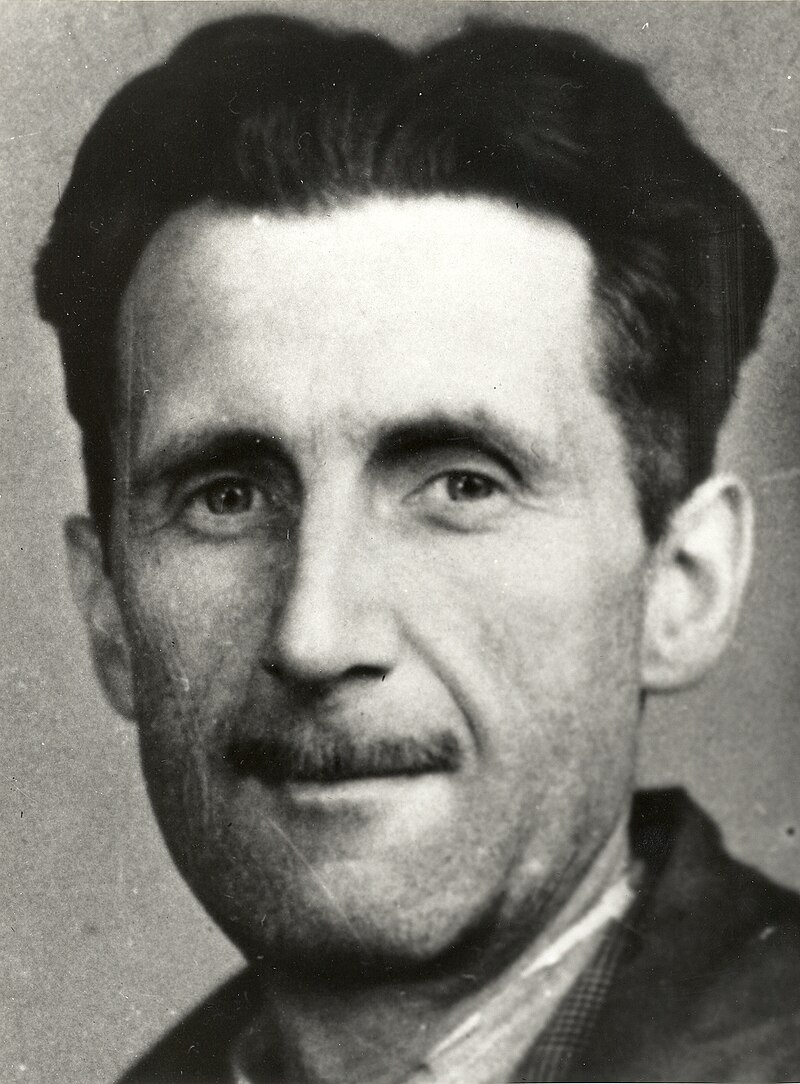
George Orwell

A photo showing the head and shoulders of a middle-aged man with black hair and a slim moustache.


Eric Arthur Blair (25 June 1903 – 21 January 1950), better known by his pen name George Orwell, was an English novelist, essayist, journalist, and critic. His work is marked by lucid prose, awareness of social injustice, opposition to totalitarianism, and outspoken support of democratic socialism.

Orwell wrote literary criticism, poetry, fiction, and polemical journalism. He is best known for the allegorical novella Animal Farm (1945) and the dystopian novel Nineteen Eighty-Four (1949). His non-fiction works, including The Road to Wigan Pier (1937), documenting his experience of working class life in the north of England, and Homage to Catalonia (1938), an account of his experiences in the Spanish Civil War, are widely acclaimed, as are his essays on politics, literature, language, and culture. In 2008, The Times ranked him second on a list of "The 50 greatest British writers since 1945".


Orwell's work continues to influence popular and political culture, and the term Orwellian – descriptive of totalitarian or authoritarian social practices – has entered the language together with many of his neologisms, including cold war, Big Brother, Thought Police, Room 101, memory hole, newspeak, doublethink, and thoughtcrime.


Colosseum

Colosseum in Rome, Italy - April 2007.jpg


The Colosseum or Coliseum , also known as the Flavian Amphitheatre (Latin: Amphitheatrum Flavium; Italian: Anfiteatro Flavio [aŋfiteˈaːtro ˈflaːvjo] or Colosseo [kolosˈsɛːo]), is an oval amphitheatre in the centre of the city of Rome, Italy. Built of concrete and sand,[1] it is the largest amphitheatre ever built. The Colosseum is situated just east of the Roman Forum. Construction began under the emperor Vespasian in AD 72, and was completed in AD 80 under his successor and heir Titus. Further modifications were made during the reign of Domitian (81–96). These three emperors are known as the Flavian dynasty, and the amphitheatre was named in Latin for its association with their family name (Flavius).

The Colosseum could hold, it is estimated, between 50,000 and 80,000 spectators, having an average audience of some 65,000; it was used for gladiatorial contests and public spectacles such as mock sea battles (for only a short time as the hypogeum was soon filled in with mechanisms to support the other activities), animal hunts, executions, re-enactments of famous battles, and dramas based on Classical mythology. The building ceased to be used for entertainment in the early medieval era. It was later reused for such purposes as housing, workshops, quarters for a religious order, a fortress, a quarry, and a Christian shrine.


Although partially ruined because of damage caused by earthquakes and stone-robbers, the Colosseum is still an iconic symbol of Imperial Rome. It is one of Rome's most popular tourist attractions and also has links to the Roman Catholic Church, as each Good Friday the Pope leads a torchlit "Way of the Cross" procession that starts in the area around the Colosseum.

2017年5月13日 星期六

week 4

A Midsummer Night Dream


A Midsummer Night's Dream is a comedy written by William Shakespeare in 1595/96. It portrays the events surrounding the marriage of Theseus, the Duke of Athens, to Hippolyta, the former queen of the Amazons. These include the adventures of four young Athenian lovers and a group of six amateur actors (the mechanicals) who are controlled and manipulated by the fairies who inhabit the forest in which most of the play is set. The play is one of Shakespeare's most popular works for the stage and is widely performed across the world.


Poet's eye

「poet's eye」的圖片搜尋結果


If- Bread

Bread – If Lyrics
If a picture paints a thousand words, 
Then why can't I paint you?
The words will never show the you I've come to know.
If a face could launch a thousand ships, 
Then where am I to go? 
There's no one home but you, 
You're all that's left me to.
And when my love for life is running dry, 
You come and pour yourself on me.

If a man could be two places at one time, 
I'd be with you.
Tomorrow and today, beside you all the way.
If the world should stop revolving spinning slowly down to die, 
I'd spend the end with you.
And when the world was through, 
Then one by one the stars would all go out, 
Then you and I would simply fly away

「if bread」的圖片搜尋結果


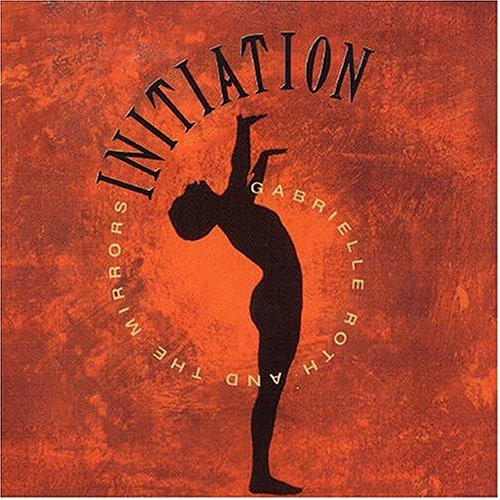
Initiation

「INITIATION」的圖片搜尋結果

Initiation is a rite of passage marking entrance or acceptance into a group or society. It could also be a formal admission to adulthood in a community or one of its formal components. In an extended sense it can also signify a transformation in which the initiate is 'reborn' into a new role. Examples of initiation ceremonies might include Hindu diksha, Christian baptism or confirmation, Jewish bar or bat mitzvah, acceptance into a fraternal organization, secret society or religious order, or graduation from school or recruit training. A person taking the initiation ceremony in traditional rites, such as those depicted in these pictures, is called an initiate.

week 17

A Midsummer Night's Dream Characters Theseus—Duke of Athens Hippolyta—Queen of the Amazons Egeus—father of Hermia Hermia—daug...